The school library is constantly evolving. Therefore, we need the most efficient technology tools to help us organize, analyze, and utilize the continuous inundation of new resources being created for leading educators and technology innovators. One of the best tools to keep abreast of the most current educational best practices is to create a Twitter PLN (Professional Learning Network). My PLN allows me to stay attuned to current trends and best practices. A Twitter PLN can be created by participating in educational Twitter chats geared to your field of expertise. Here are a few that I find to be very informative: #nctlchat, #tlchat, #edchat, #edtechchat, #tlap, and #edcamp. I also use TweetDeck to keep track of multiple and simultaneous chats. This allows me to be an active participant in chats that occur at the same time. Based on the educators and administrators that participate in various chats, I decide who to follow and allow in my PLN. A great blog about TweetDeck and educational chats can be found at http://www.theedublogger.com/2014/06/25/twitter-chats/.
Other technology sites that are beneficial in managing the school library are as follows:
Google Drive www.google.com/drive/index.html
edWeb.net www.edweb.net/LMC
Free Tech for Teachers www.freetech4teachers.com
Pinterest www.pinterest.com
Livebinders www.livebinders.com
More useful tools can be found at Edudemic: Connecting Education and Technology blog http://www.edudemic.com/50-education-technology-tools-every-teacher-should-know-about/
Technology is there to help us with a wide range of tasks, including management and professional development. And it is constantly evolving, so dive into your Twitter PLN and chats so you will have the most up to date educational information and tools for your success. I look forward to meeting you during our educhats!
Sunday, December 28, 2014

Tuesday, November 11, 2014
Primary Sources
Over the course of the last 2 weeks, we have been covering primary sources in my 4th grade classes. Mainly, we have been discussing the difference between primary and secondary sources using the websites http://www.kidscomputerlab.org/index.php/research-skills/primary-vs-secondary-sources/ and http://www.cyberbee.com/yesteryear/. The students had fun trying to guess when the photograph was
taken based on the clothing. (The funniest guess was the 1970's.) It was taken in Colorado in 1908.
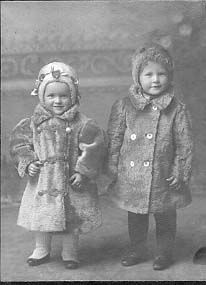

taken based on the clothing. (The funniest guess was the 1970's.) It was taken in Colorado in 1908.
We discussed why this was considered a primary source and how it could be used for research. They had a blast trying to figure out information from the clues in the photograph. Next we watched a film clip by Thomas Edison from 1914, Buster's Dog to the Rescue, which the students loved. Other primary documents that would be great when researching were church records, cemetery records, war records, diaries, journals, photographs, film, art, and sound recordings. The conversation quickly turned to how we could use these various sources. The example used was this photograph from the Library of Congress digital archives http://www.loc.gov/pictures/collection/csas/item/csas200802661/
The students had recently visited Old Salem on a field trip and had to complete a project on what they learned. This photo of the Chimney House in Old Salem would be a great addition to complement their project as it also provides the photographer's name, date of photograph, and historical information on the house itself (built in 1789).
Of all the many aspects of librarianship that make up the job that I do, research is my absolute favorite. Seeing sparks ignite in students when connections are made to reality is very powerful. When we can read a fiction book, such as Wonderstruck by Brian Selznick and it creates that desire to find out more on a particular subject or place, such as the American Museum of Natural History, I want to be there for their journey. Using primary resources helps that journey to become real to them. To make it easier for students and teachers to access online primary resources, I have compiled a Symbaloo page full of primary sources links. Sharing some Symbaloo ♥: Primary Sources Webmix http://edu.symbaloo.com/home/mix/13ePQJMDMZ. I will post Part 2 of our lesson, which includes our creation aspect using primary sources after we have completed it. Have fun sleuthing!
Sunday, September 7, 2014
A Great Day at the Bookmarks NC Festival
For all my friends who missed BookMarks 10th Annual Festival yesterday, you missed a treat. With a line up of authors that included Rita Mae Brown, Emily Giffin, Robert Morgan, Lev Grossman, Maggie Stiefvater, Eric Litwin, Scott Berg, James McBride, J.A. Jance, Sam Kean, Karen Abbott, L.M. Elliott, Frances Mayes, Meg Medina, Margaret Stohl, Mary Alice Monroe, and many, many others. One of the best sessions was the "Southern Identity in Writing", which featured Robert Morgan, Mary Alice Monroe and Jeremy B. Jones discussing what makes a writer southern.
 The trio discussed everything from southern region to dialect to passion. Though these authors are regional authors, their artistic work transcends region to provide stories that have universal appeal. Despite the oppressive heat, we had well over 100 attendees in the audience. For more info on these acclaimed authors, visit their websites. Robert Morgan http://www.robert-morgan.com/, Mary Alice Monroe http://www.maryalicemonroe.com/, and Jeremy B. Jones http://thejeremybjones.com/thewritingof/Home.html .
The next session I worked was "Publishing Today: Digital, Traditional, and Indie" with Megan Bryant, Jen McConnel and Bill Kane. They all discussed the changing landscape of publishing and how it affected the publishers. Gone are the days where you didn't need an agent. There are fewer publishing houses. Authors make more from the sales of e-books. And independent publishing is becoming a validated form of getting the stories to the public. The advice they gave to writers was to never give up. If you give up, your work will NEVER be published. This was a fascinating session which also attracted over 100 attendees.
The icing on the cake for me was to see Mary Alice Monroe. I have loved Mary Alice's books since I read Girl in the Mirror many years ago. Her ability to infuse a social or environmental situation into the character's story is what drew me to her. In Skyward, you are made aware of injured birds of prey and the people who provide sanctuary while the birds are healing. In Last Light over Carolina, the issue is the decline in the coastal SC shrimping businesses. In The Beach House, you learn about the annual loggerhead turtle spawn. In The Butterfly's Daughter, we see the migration of the Monarch butterflies.
 In this session, Mary Alice discussed her children's book, A Butterfly Called Hope, which chronicles the life cycle of the caterpillar into a butterfly. She also discussed the dire situation of the Monarch butterflies, which has been in the news lately. http://strib.mn/1lPyIuq and http://bit.ly/Mwr5bY are a couple of articles that describe the plight of the Monarchs. You can instantly see where Mary Alice's passions lie. She is passionate about nature. She understands the importance of preserving nature and we also see that in her writing. Yesterday she said, "It's time to put our ear to the ground and listen". Yes, we do! That is why I love her books so much. I consider myself an environmentalist as well. My passions are the food I eat and the products I use. I eat organic and non-GMO food as this is what is healthiest for my body. I also believe in eliminating synthetic chemicals and toxins from my beauty, skin care and household cleaning products. I think we all can make a difference, even if we start small. But we need to have a passion, plus we need to make a decision to simply "start". Thus I am committed to doing more of what I love, which is getting involved. Through the art of literature, we can be reminded of what is important. Authors like Mary Alice Monroe remind us of what is possible when we are passionate about something.
Mary Alice's session was the last of the day, ending at 5pm and then, while the Bookmarks volunteers were beginning to break down the tents and equipment, Mary Alice walked over to the book signing tent. She graciously posed for a picture with Emily Giffin and then proceeded to sign books for those who braved the heat. I was the last in line, waiting with 9 books for Mary Alice to sign. She took the time to address them all to me. She is one of the most gracious and humble women I have ever met. That is why she will always be among my favorites. And this is why I volunteer at Bookmarks NC Festival. I get the opportunity to meet and work with authors who, literally, can change the world.

The next session I worked was "Publishing Today: Digital, Traditional, and Indie" with Megan Bryant, Jen McConnel and Bill Kane. They all discussed the changing landscape of publishing and how it affected the publishers. Gone are the days where you didn't need an agent. There are fewer publishing houses. Authors make more from the sales of e-books. And independent publishing is becoming a validated form of getting the stories to the public. The advice they gave to writers was to never give up. If you give up, your work will NEVER be published. This was a fascinating session which also attracted over 100 attendees.
The icing on the cake for me was to see Mary Alice Monroe. I have loved Mary Alice's books since I read Girl in the Mirror many years ago. Her ability to infuse a social or environmental situation into the character's story is what drew me to her. In Skyward, you are made aware of injured birds of prey and the people who provide sanctuary while the birds are healing. In Last Light over Carolina, the issue is the decline in the coastal SC shrimping businesses. In The Beach House, you learn about the annual loggerhead turtle spawn. In The Butterfly's Daughter, we see the migration of the Monarch butterflies.
Mary Alice's session was the last of the day, ending at 5pm and then, while the Bookmarks volunteers were beginning to break down the tents and equipment, Mary Alice walked over to the book signing tent. She graciously posed for a picture with Emily Giffin and then proceeded to sign books for those who braved the heat. I was the last in line, waiting with 9 books for Mary Alice to sign. She took the time to address them all to me. She is one of the most gracious and humble women I have ever met. That is why she will always be among my favorites. And this is why I volunteer at Bookmarks NC Festival. I get the opportunity to meet and work with authors who, literally, can change the world.
Subscribe to:
Posts (Atom)